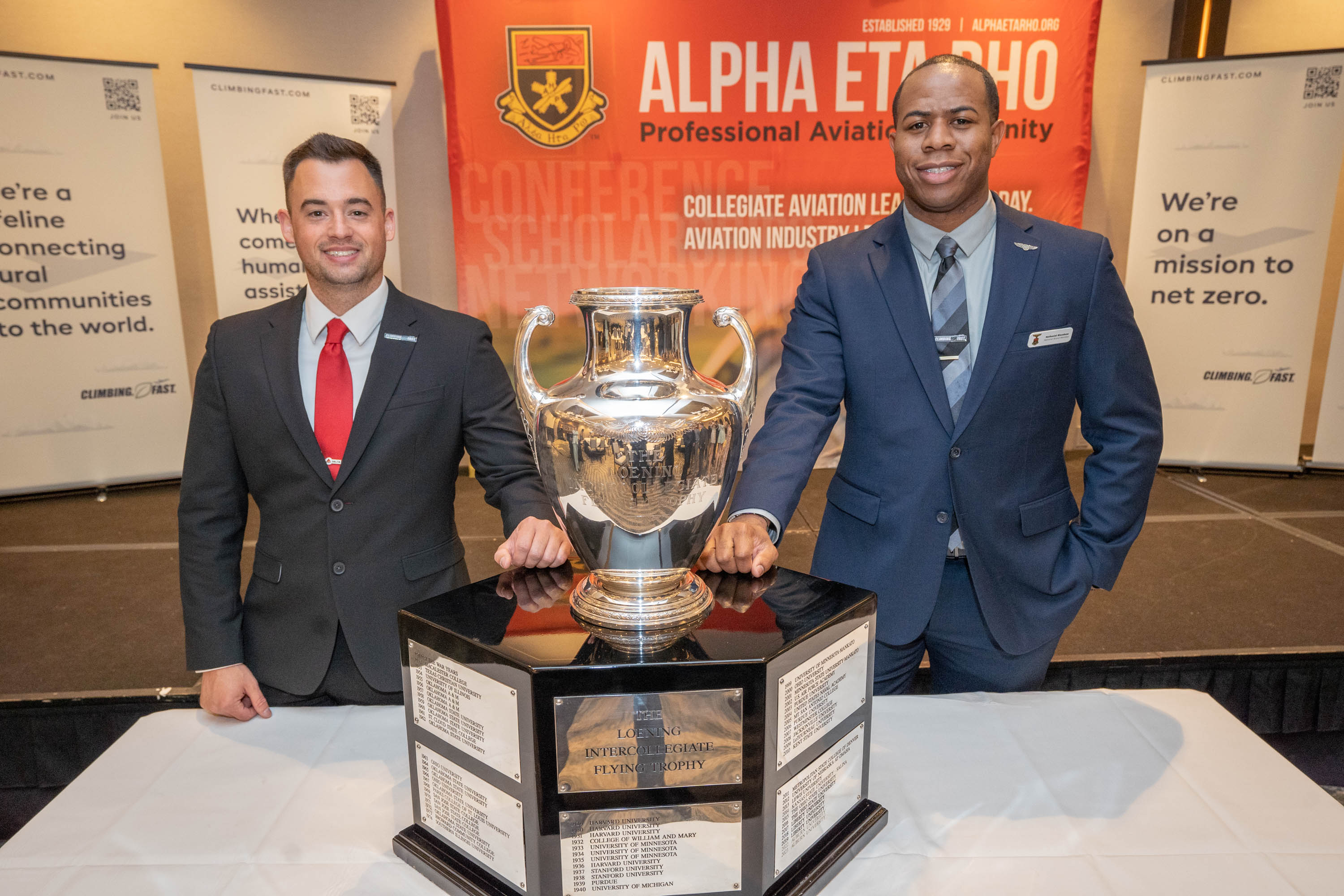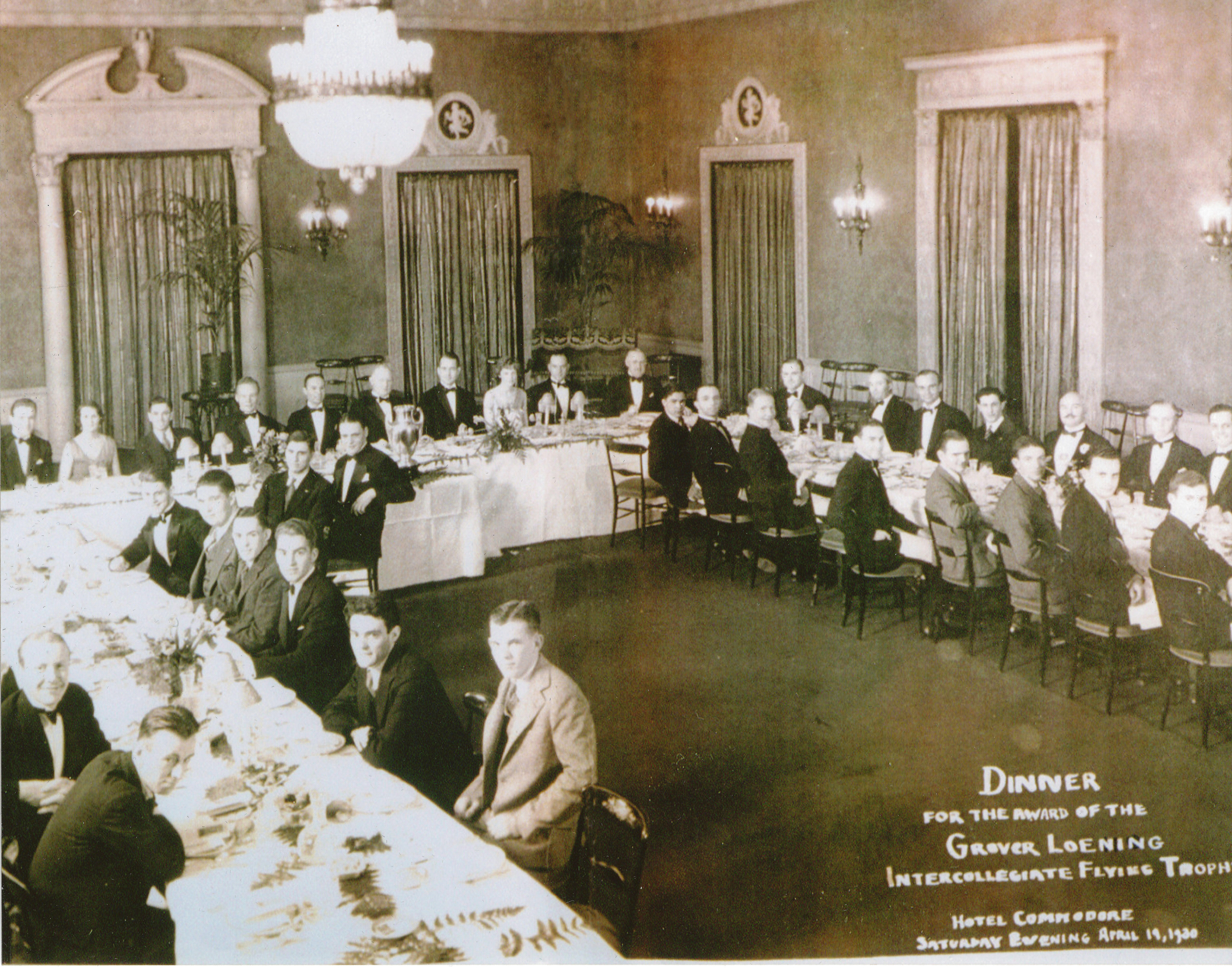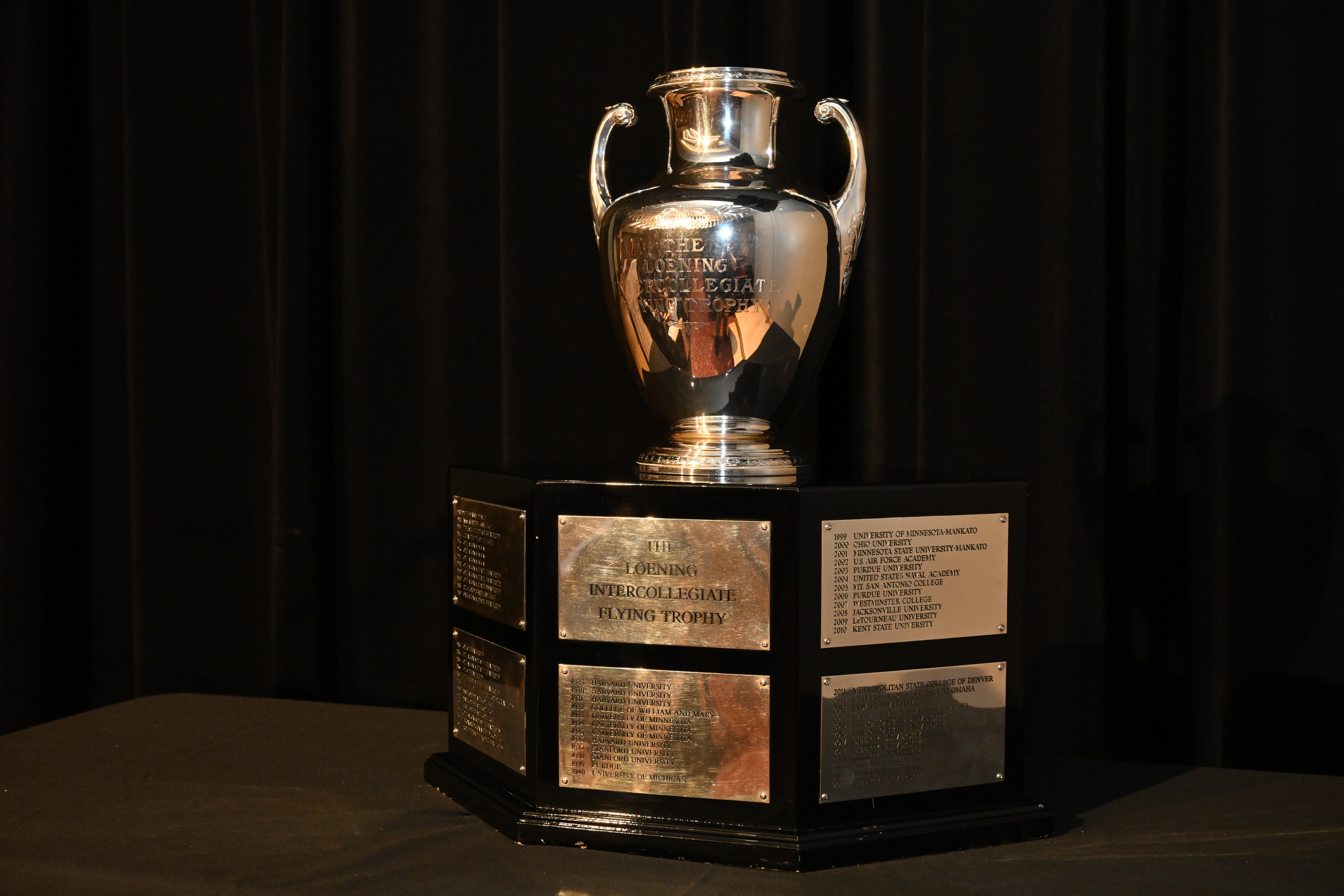
Who is Grover Loening and the Loening Trophy?
Grover Loening was a pioneering aviation engineer, entrepreneur, and educator whose ideas helped shape both modern aerospace and today’s collegiate aviation community. At just 22, he wrote the first master’s thesis in aeronautics at Columbia University, essentially kickstarting formal degree programs in aeronautical and aerospace engineering. He went on to design and test aircraft himself, inventing technologies like early flying boats, retractable landing gear, and advanced fighters and amphibians that set speed, range, and altitude records while influencing military, corporate, and naval aviation worldwide. Yet what makes him especially relevant to college students is his belief that the future of flight rested in student innovation: in 1929 he created the Loening Trophy as a standing challenge to recognize the top intercollegiate aviation program and personally mentored students and judged the competition for decades, earning the title “father of Collegiate Aviation.” The original Loening Trophy judging committee consisted of Grover Loening himself, and his close friends Amelia Earhart, Charles “Chuck” Lindbergh, and John Towers. Loening's long career - from engineering for the Wright company to advising national agencies and receiving top aviation honors - was driven by a passion to see young people use aviation not just as a career, but as a platform to push technology, safety, and global connectivity further than his own generation.
What is "The Challenge"?
Students from interdisciplinary teams (i.e engineering, business, aviation, or other applicable majors*) will work together to design the next generation training aircraft. Using the Cessna 172 as the baseline model, show how your training aircraft is better.
*Any student may participate in a team, regardless of their major, as long as they are able to contribute to the project.
Teams must consider the following:
Technical (i.e engineering students)
-
Cockpit (size, comfortability, number of seats, avionics, emergency capabilities)
-
Airframe
-
Cruise speed & Range
-
Useful Load (passenger and cargo)
-
Flight Controls
-
Power Controls
-
Type of Engine & Energy Source
-
Safety features (high loading landing gear, HUD, Digital Twin, TPMS, ABS, FD, AI autopilot, parachute, auto land, etc.)
Economic (i.e business students)
-
How you're going to build it, how you're going to market it, how you're going to sustain it
-
What manufacturer could I work with
-
Cost to manufacturer & MSRP
-
Maintenance feasibility
Feasibility/Practical Use (i.e aviation/pilot students)
-
Will it fly as designed
-
How has the overall experience for the pilot improved
Presentations Must Include:
-
Presentation that best fits your project ~ 10 minutes
-
X-Plane model to show feasibility: fuel efficiency, fuel type, glide distance, range, etc
-
Poster for public display
-
The Design Selection Report (DSR): A breakdown of why they chose their specific configuration (e.g., high wing vs. low wing, electric vs. ICE).
-
Weight & Balance Table: A mandatory spreadsheet showing the CG (Center of Gravity) envelope.
-
CAD/Technical Drawings: At least a 3-view drawing with major dimensions (wingspan, length, height). (also used on poster)
Why should you compete?
If you want to launch an aviation career that actually stands out, competing for the Loening Trophy in 2026 is one of the best moves you can make. This isn’t a flying contest - it’s a national recognition of being part of the top collegiate aviation program, showcasing students who excel in safety, academics, leadership, community outreach, and innovation, all in the spirit of Grover Loening’s original challenge to push the future of air travel. Being part of a Loening team puts you in the same legacy that includes names like Lindbergh and Earhart, adds serious weight to your resume or grad school applications, and proves you can operate at a high level both in the cockpit and in the classroom.
When do we need to submit?
August 15, 2026 - Project is fully launched - students start to create their interdisciplinary teams of no more than 15 students. Students are welcome to choose a faculty advisor at their discretion, and leverage faculty/staff/research resources available to them.
September 1, 2026 - Loening Judging Committee available for comment and feedback
October 1, 2026 - Notice of Intention to Submit - Who are your people (open to any students), what are you doing, and how are you doing it?
December 1, 2026 - Submit a written report and x-plane model
January 1, 2027 - Judging committee will schedule presentation slots for the month of January. Students will create and deliver a full presentation virtually before the committee.
Where will it be judged/awarded?
1-2 representatives from the top two finalist teams will be offered the opportunity to hit the main stage at The Collegiate Aviation Symposium to present their research and receive feedback from the audience. The following day the winner will be announced, as well as next year’s challenge. Through the Collegiate Aviation Symposium, held at The Ohio State University in Columbus, Ohio, you’ll network with industry professionals, present in front of stakeholders, serve as a knowledgeable representative for the future of aviation, and help shape how collegiate aviation is presented to the world - all while building the leadership, communication, and cross-disciplinary skills that employers in aviation and aerospace are actively looking for.
Frequently Asked Questions
Q: Do I need to be an Alpha Eta Rho member to participate?
A: No! Any student with an interest in aviation may work on a team
Q: Does my school need to have an Alpha Eta Rho chapter to participate?
A: No! Any school with an aviation-focused program is eligible to participate.
Q: Can professors/faculty/staff participate in the challenge?
A: We recommend students use all resources available to them. All parties utilized must be credited for their contribution, but only students will be allowed to present in front of the judging committee or on stage at the Symposium.
Q: Do I need to be a pilot/flight student to participate?
A: No, as long as you are able to contribute to the project, you are eligible to participate.
Q: What are the anticipated costs associated with the project?
A: We expect that the only direct cost will be the purchase of X-Plane. The remainder of the project is all theoretical and only involves time commitment. Winning teams, however, will need to consider cost of transportation and lodging for the Collegiate Aviation Symposium.
Q: What are the time requirements to compete in this project?
A: Each school will be responsible for selecting a team of individuals to accomplish the complete task. It is anticipated that during the fall semester, a team of 10 students would devote approximately 700-900 total combined hours on this project. This equates to approximately 5 hours per week, per individual, over the course of a 15 week semester.
Grading Rubric
| Evaluation Criteria | Excellent | Good | Adequate | Poor | Plagiarized |
|
Technical Design |
Comprehensive cockpit design with advanced avionics, innovative airframe with optimized aerodynamics, superior cruise speed/range, exceptional useful load capacity, advanced flight/power controls, cutting-edge engine/energy source selection, and multiple integrated safety features (HUD, Digital Twin, AI autopilot, parachute, etc.). All technical specifications exceed the Cessna 172 baseline with detailed engineering justification. | Well-designed cockpit with modern avionics, solid airframe design, improved cruise speed/range over baseline, good useful load capacity, effective flight/power controls, appropriate engine/energy source, and several safety features included. Technical specifications show clear improvements over the Cessna 172 with adequate justification. | Basic cockpit design with standard avionics, functional airframe, cruise speed/range comparable to or slightly better than baseline, acceptable useful load, conventional flight/power controls, traditional engine/energy source, and basic safety features. Meets minimum technical requirements with some improvements over Cessna 172. | Incomplete cockpit design, poorly conceived airframe, inferior cruise speed/range compared to baseline, inadequate useful load capacity, conventional or flawed flight/power controls, questionable engine/energy source choice, and minimal or no safety features. Technical design shows little improvement or understanding of engineering principles. | Technical content copied directly from existing aircraft designs, manuals, or other sources without proper attribution or original analysis. No original engineering work was demonstrated. |
| Business and Economic Viability | Solid business plan with clear manufacturing strategy, effective marketing plan, sustainability considerations, potential manufacturer partnerships identified, reasonable cost estimates, and good maintenance feasibility analysis. Economic models show a practical understanding of market viability. | Solid business plan with clear manufacturing strategy, effective marketing plan, sustainability considerations, potential manufacturer partnerships identified, reasonable cost estimates, and good maintenance feasibility analysis. Economic models show a practical understanding of market viability. | Basic business plan covering manufacturing, marketing, and sustainability, general manufacturer considerations, approximate cost estimates, and basic maintenance feasibility. The economic model meets minimum requirements but lacks depth or innovation. | Incomplete or unrealistic business plan, vague manufacturing/marketing strategies, no sustainability plan, no manufacturer partnerships identified, inaccurate or missing cost analysis, or inadequate maintenance considerations. The economic model shows a poor understanding of aviation business realities. | Business plan, market analysis, or cost data copied from existing sources without attribution or adaptation to the specific aircraft design. No original economic analysis. |
| Pilot Experience & Safety | Notable improvements to pilot experience with better ergonomics, improved controls, reduced workload elements, good visibility, modern cockpit features, and meaningful safety improvements. X-Plane simulation shows improved handling and clear consideration of pilot needs. | Notable improvements to pilot experience with better ergonomics, improved controls, reduced workload elements, good visibility, modern cockpit features, and meaningful safety improvements. X-Plane simulation shows improved handling and clear consideration of pilot needs. | Some improvements to pilot experience include acceptable ergonomics, functional controls, basic workload considerations, adequate visibility, standard cockpit features, and basic safety considerations. X-Plane simulation demonstrates flyable characteristics with modest improvements. | Minimal or no improvement to pilot experience, poor ergonomic design, conventional or problematic controls, increased workload, limited visibility, outdated cockpit concepts, or inadequate safety considerations. X-Plane simulation shows questionable handling or no clear pilot benefits. | Pilot experience descriptions, safety features, or cockpit designs copied from existing aircraft without attribution or original analysis of improvements. |
| Feasability and Simulation | Functional X-Plane model with realistic performance data, good fuel efficiency analysis, appropriate fuel type, reasonable glide distance, accurate range data, solid DSR with good justification for design choices, complete Weight & Balance calculations, and clear CAD/technical drawings. Demonstrates aircraft feasibility with minor gaps. | Functional X-Plane model with realistic performance data, good fuel efficiency analysis, appropriate fuel type, reasonable glide distance, accurate range data, solid DSR with good justification for design choices, complete Weight & Balance calculations, and clear CAD/technical drawings. Demonstrates aircraft feasibility with minor gaps. | Basic X-Plane model showing flyable characteristics, acceptable fuel efficiency data, standard fuel type, basic glide distance/range calculations, complete DSR covering key design decisions, functional Weight & Balance table, and basic CAD/3-view drawings meeting minimum requirements. Demonstrates basic feasibility. | Incomplete or unrealistic X-Plane model, inaccurate or missing fuel data, inappropriate fuel type selection, incorrect glide distance/range calculations, incomplete DSR lacking justification, missing or incorrect Weight & Balance calculations, or inadequate technical drawings. Fails to demonstrate that the aircraft will fly as designed. | X-Plane model, DSR, technical drawings, or performance data copied from existing aircraft or sources without attribution or original analysis. |
| Legacy & Presentation |
Outstanding 10-minute presentation expertly tailored to project scope, engaging poster for public display with professional graphics and clear information hierarchy, complete integration of all required elements (DSR, Weight & Balance, CAD drawings), exceptional team coordination evident, and presentation honors Grover Loening's legacy of student innovation. Demonstrates leadership, communication excellence, and vision for advancing collegiate aviation. |
Strong presentation well-suited to project within time limit, professional poster with good visual appeal and clear information, all required elements included and well-integrated, good team coordination, and clear connection to the Loening Trophy mission. Shows strong communication skills and understanding of collegiate aviation advancement. | Competent presentation covering projects within time constraints, functional poster meeting display requirements, all required elements present, adequate team coordination, and basic acknowledgment of the Loening Trophy's purpose. Meets presentation requirements with standard execution. | Weak presentation, poorly organized, or exceeding the time limit; inadequate poster lacking professionalism or required information, missing required elements, poor team coordination evident, or no connection to the Loening Trophy legacy. Fails to effectively communicate project value. | Presentation content, poster designs, or project narrative copied from other teams or sources without attribution. No original synthesis or presentation of work. |
Past Trophy Winners
1920s
-
1929–1931 — Harvard University
1930s
-
1932 — College of William and Mary
-
1933–1935 — University of Minnesota
-
1936–1938 — Stanford University
-
1939 — Purdue University
1940s
-
1940 — University of Michigan
-
1941–1951 — The War Years
1950s
-
1952 — Macalester College
-
1953 — Texas Christian University
-
1954 — University of Illinois
-
1955–1957 — Oklahoma A&M
-
1958–1960 — Oklahoma State University
1960s
-
1961 — St. Cloud State College
-
1962 — Oklahoma State University
-
1963 — Ohio University
-
1964–1965 — Oklahoma State University
-
1966 — Ohio University
-
1967 — Oklahoma State University
-
1968 — Parks College of St. Louis University
-
1969–1971 — San Jose State College
1970s
-
1972 — Oklahoma State University
-
1973 — Broward Community College
-
1974 — Southern Illinois University
-
1975–1976 — Oklahoma State University
-
1977–1978 — Southern Illinois University
-
1979–1980 — Oklahoma State University
1980s
-
1981 — University of Illinois
-
1982 — Oklahoma State University
-
1983 — Western Michigan University
-
1984–1986 — Oklahoma State University
-
1987 — Mt. San Antonio College
-
1988 — The Ohio State University
-
1989 — Embry-Riddle University - Prescott
1990s
-
1990 — Oklahoma State University
-
1991 — Embry-Riddle University - Prescott
-
1992–1993 — Oklahoma State University
-
1994 — Parks College of St. Louis University
-
1995–1996 — Central Texas College
-
1997 — Ohio University
-
1998 — Central Texas College
-
1999 — University of Minnesota-Mankato
2000s
-
2000 — Ohio University
-
2001 — University of Minnesota-Mankato
-
2002 — U.S. Air Force Academy
-
2003 — Purdue University
-
2004 — United States Naval Academy
-
2005 — Mt. San Antonio College
-
2006 — Purdue University
-
2007 — Westminster College
-
2008 — Jacksonville University
-
2009 — LeTourneau University
2010s
-
2010 — Kent State University
-
2011 — Metropolitan State College of Denver
-
2012 — University of Nebraska at Omaha
-
2013 — Lewis University
-
2014 — Kansas State University - Salina
-
2015–2016 — The Ohio State University
-
2017–2019 — Liberty University
2020s
-
2020–2021 — The COVID-19 Years
-
2022–2023 — Auburn University
-
2024 — Liberty University
-
2025 — The Ohio State University